


Draft Beer Tower
A draft tower, also known as a beer tap tower or draft arm, provides an area to mount your draft faucets and is where the faucet connects to the beer line via the faucet shank. The raised tower allows you to fit a glass, pitcher, or growler under the faucet to be filled. The beer line runs from the keg coupler into the draft tower, which attaches to the end of the shank opposite the faucet.
- Fast Delievery
- Quality Assurance
- 24/7 Customer Service
Product Introduction
What is Draft Beer Tower
A draft tower, also known as a beer tap tower or draft arm, provides an area to mount your draft faucets and is where the faucet connects to the beer line via the faucet shank. The raised tower allows you to fit a glass, pitcher, or growler under the faucet to be filled. The beer line runs from the keg coupler into the draft tower, which attaches to the end of the shank opposite the faucet. This requires an opening cut into your counter or bar top to mount the tower properly. Most towers require a 3' diameter hole, but this can vary depending on the size and style of your tower. Kegerators typically have an opening for the draft tower at the top of the unit. Draft beer stored in the lines inside the draft tower can stay chilled through a flow of cool air from the refrigeration unit where the keg is stored up into the tower (known as an air-cooled draft system) or through a mixture of glycol coolant running in a line packaged with the beer line, known as a trunk line (known as a glycol-cooled draft system). Keeping this beer cool is important because it will pour foamy if it gets warm while waiting to be dispensed, which leads to wasted product and a potential mess.
Advantages of Draft Beer Tower
Cooling system
One important aspect of any beer dispensing system is temperature control. Our draft beer towers are fitted with advanced cooling systems with temperature control settings that can be adjusted to your preference. This ensures that beer is dispensed at just the right temperature every time, providing the best taste and experience for the customers. The cooling systems are designed to be highly energy-efficient, reducing electricity consumption and saving costs in the long run.
Capacity
Our draft beer towers come in a range of capacities, ensuring that there is an option for every merchant's needs. From small to large, our towers are capable of dispensing a vast range of beer types and volumes, making it ideal for commercial use. The larger draft beer towers can accommodate several beer taps or nozzles, providing merchants with greater flexibility and variety in the types of beer they can offer.
Material quality
We use only the highest quality materials in the production of our draft beer towers, ensuring their sturdiness and durability. They are made using stainless steel, which is resistant to corrosion and rust, ensuring that the towers will last for years with minimal wear and tear. Our draft beer towers are also fitted with sturdy taps, valves, and hoses that are designed to withstand the constant wear and tear of commercial use.
Ease of use
Our draft beer towers are very easy to use, making them an ideal choice for merchants who are new to the business. They come with detailed instructions for installation and usage, ensuring that merchants can set up the towers quickly and without the need for additional technical expertise. The towers are also designed to be easy to clean, making sure they always appear attractive and faultless for the customers.


Why Choose US
One-stop solution
With rich experience and one-to-one service,we can help you choose products and answer technical questions.
01
Customization services
They provide customization services to meet specific customer requirements, ensuring that clients receive products that exactly fit their needs.
02
Innovation
We are dedicated to improving our systems continually, ensuring that the technology we offer is always cutting edge.
03
24h online service
We try and respond to all concerns within 24 hours and our teams are always at your disposal in case of any emergencies.
04
Choosing the Right Tower for Your Draft System
There are a couple of things you'll want to know before selecting your draft tower:
Most home draft beer enthusiasts own a kegerator, which is known as a direct draw draft system. Kegerators for home use typically use what we refer to as a standard draft beer tower or draft arm that mounts to the top of the refrigerator. This tower style is suitable for serving 1-3 different types of beer at a time, depending on how many kegs your kegerator can hold.
Commercial establishments can also have a direct draw system, whether it's a kegerator stored under a bar or counter or if they have a cooler or refrigerated area adjacent to the point of distribution with the tower and faucets mounted to the adjoining wall. Commercial kegerators and walk-in coolers can hold more kegs than residential units, which allows you to use a tower that can hold more than three taps.
A long-draw draft system is required for areas where kegs cannot be stored in or near the same space you are pouring them from. Long-draw systems deliver draft beer from your cooler to the draft tower through insulated beer lines. These beer lines are kept chilled as they travel from the kegs to the draft tower to prevent the beer from pouring foamy and prevent the formation of bacteria in the lines. As stated earlier, air-cooled and glycol are two methods for cooling beer in a long-draw draft system. A draft tower compatible with the method of cooling used for your system is required to keep the beer inside your tower properly chilled.
A glycol-cooled beer tower has room to fit the trunk line. From there, the coolant line runs across glycol cooling blocks inside the tower to help keep the beer cool and then runs back out of the tower to return the glycol to the chiller via the trunk line. Air-cooled towers receive chilled air, which is directed into the draft tower by an air baffle and air separator, while spent air is sent back through the ducts to the cooler.
Types of Draft Beer Towers
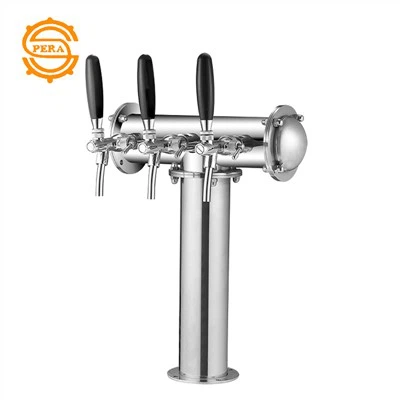
A standard tower, also known as a draft arm, is probably what you imagine when you hear the term "draft tower." These tall cylindrical towers can be mounted to the top of a kegerator, a bar top, or a counter and can hold up to three draft faucets as part of a direct draw draft system.
T-shaped draft towers work with a variety of commercial draft beer systems. They have a cylindrical base, much like a standard tower, but with a box-shaped top where the faucets are attached. T-Towers can be mounted to a bar or counter as part of a direct draw system or an air-cooled or glycol-chilled system. They are popular because they require only one mounting hole and can accommodate 2-8 draft faucets.
These towers, also known as pass-through towers or H-Towers, allow you to maximize your draft offerings by holding up to 20 faucets. Double-pedestal towers are ideal for air-chilled systems because it allows you to circulate air to and from the draft tower with separate ducts. Using this style of draft tower will require multiple holes to be drilled in your bar or counter.
As their name suggests, a wall-mount draft tower attaches to a vertical surface and allows you to serve a large variety (as many as 12 taps) of beer, allowing you to serve draft beer without having a tower mounted on your bar or counter. Typically these towers have a drip tray under the faucets to catch spills and hold glasses to prevent beer from spilling on the floor. They are a perfect solution for a direct draw system where a walk-in cooler is on one side of a wall, and the distribution point is on the other.
Wall-mounted towers also work with glycol and air-cooled systems. In addition to the holes required to mount the tower, you will also need to cut openings for the air box on the back of the tower or the tubes that feed the beer lines into the tower.
Another way to save space on your bar while serving draft beer is to mount your tower under the bar or counter. The box on the back of the tower attaches to the corresponding surface above it to secure the tower. They are compatible with air and glycol chilled systems and can hold 4-12 faucets.
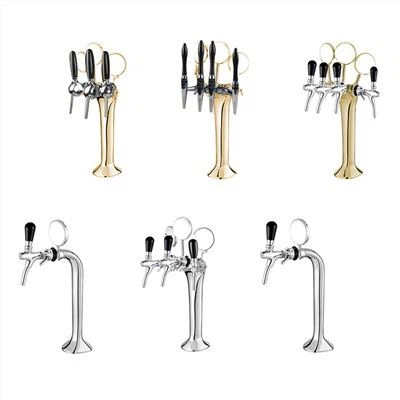
While most draft towers are constructed of stainless steel or metal, you're only limited by your creativity when it comes to constructing one. In addition to stainless towers, KegWorks also offers draft towers made from ceramic, black iron pipe, wooden barrels, and designer towers.
Side Pull Faucets Vs Standard Draft Beer Faucets
Your standard draft faucet for a North American draft system is kind of like a light switch, you pull your tap handle forward to turn it on and push it back to turn it off. A side pull faucet is more similar to a dimmer switch because the more you turn the lever, the "brighter" the beer in your glass gets. Opening the side faucet handle just a little creates that dense, wet foam, while completely opening the faucet provides you with a typical beer flow.
On top of the direction of the handle, another distinct difference between side pull faucets and standard faucets is how to fill your glass. The normal practice for pouring a pint of draft beer involves holding your glass just below the spout, but that's not the case with a side pull tap. The spout is inserted into the glass and beer to help craft the head of foam. While this may seem unsanitary to some, the spout can be easily detached, and European establishments clean their spouts daily.
The real magic behind the side pull faucet takes place inside the tap, where a micro screen aerates the beer to create the creamy wet foam. It is similar to the disc inside a nitro stout faucet, creating the little bubbles and creamy texture found in a pint of Guinness. One feature the Czech side pull faucet shares with some standard faucets is a flow control lever that manages the flow of beer to the ball valve lever. This added control allows you to fine-tune your pours along with the side pull lever itself.
How to Install Draft Beer Tower
Installing a tap tower requires a handful of components working together, with one of the more typical configurations highlighted below.
Mounting the tap tower: First, mount the tap tower to the desired location. Use the mounting hardware provided with the tower to ensure it is securely attached to the surface.
Connecting the beer line: Once the tower is mounted you'll need to connect the beer lines. For a simple kegerator connect the vinyl tubing to the end of the shank with an oetiker clamp. If you're connecting the beer line to a tower on a remote system. Make sure that you have the right restriction in place before connecting the line. We want the beer to pour correctly after it's hooked up.
Installing the tap handles: Install the tap handles on the tap tower. Make sure they are securely attached and tightened to prevent them from coming loose during use.
Pressure test the lines: Before connecting the keg couplers it's nice to pressure test the lines to verify there aren't any leaks.
Connecting the keg coupler: Connect the keg couplers to tap the kegs.
Testing the flow: Turn on the CO2 tank and test the flow of beer through the tap. Adjust the pressure as necessary to achieve the desired flow rate.
Maintenance Tap Tower
Maintaining a tap tower is easy and straightforward, and can be done with a few simple steps:
Regular cleaning
Clean the tap tower and tap handles regularly to prevent the buildup of bacteria and other contaminants. Use a cleaning solution specifically designed for beer lines and tap towers. Here are some Beer Line Cleaning FAQ's
01
Insulation
If using an air-cooled system, ensure that the tap tower is properly insulated to prevent condensation buildup and to maintain proper temperature.
02
Glycol cooled system
If using a glycol-cooled system, ensure that the glycol level is maintained at the proper level and that the glycol is changed every couple of years.
03
Hose replacement
Replace hoses as needed to prevent leaks and ensure proper flow. Vinyl lines should be replaced every 12-18 months.
04
Professional help
If experiencing issues with the tap tower or flow, seek professional help to diagnose and fix the issue.
05
Parts of a Draft Beer Faucet
Draft beer faucets look pretty straightforward, and in many ways they are. But they are also made up of a slew of smaller parts, and each one is essential to the assembly's proper function. Over time, these smaller parts wear and tear, which can lead to leaks and other malfunctions. When this happens, it's a good idea to have an understanding of how the parts of your faucet fit together so you can replace them easily. With a little know-how, you can also refurbish an old beer faucet or build one from scratch. That's where a beer faucet diagram comes in handy. The following is a breakdown of a standard rear sealing draft faucet.
Tap handle - The handle that connects to and controls the lever. It's the part you pull forward to initiate beer dispensing. It can be replaced with a branded, novelty, or custom handle.
Lever collar - A small piece of metal hardware that holds the faucet lever assembly secure. It also helps align a branded tap marker so that it is forward facing and visible to users and consumers.
Lever bonnet - When paired with a friction washer, it creates the friction necessary to open and close the beer faucet.
Friction washer - This friction created by this small but significant faucet part prevents the lever from sliding loosely during use.
Ball washer - It's the first piece that goes onto the faucet lever, where it seals the faucet to prevent spray. If the ball washer looks dingy, dirty, or moldy, it's a sign of infection.
Lever - The metal piece that controls the opening and closing of the internal valve that controls the flow of beer through the faucet body. When you pull the lever forward by way of the tap handle, it pushes the shaft backwards, which opens the valve. Levers are threaded to attach to the faucet knob/tap handle.
Faucet body - The largest single component of your beer faucet, it directs the flow of beer through the spout to your waiting glass. Faucets come in different finishes. We recommend stainless steel to ensure off, metallic flavors don't taint your beer.
Faucet body gasket - Seats the faucet to the beer shank for a leak-free connection.
Shaft - Connected to the lever, it is pushed forward or pulled back to control the flow of fluid.
Shaft seat/seating washer - Seals the valve to stop the flow of beer. As it wears with age, you may experience a small, slow leak.
Shaft nut - The metal fastener that secures the shaft seat to the shaft.
Faucet shaft assembly - The term for the shaft, seat, and nut when referencing it as one unit.
Beer Keg Equipment
Beer keg equipment is essential for the storage, dispensing, and delivery of draft beer. From kegerators to CO2 tanks and regulators, there are many components that go into a good kegging setup for draft system.
Kegerators and draft beer systems
A kegerator is a refrigerator that is specifically designed to hold a keg of beer and dispense it through a two tap system. It is an excellent choice for homebrewers who want to enjoy draft beer without the hassle of filling bottles. A kegerator typically comes with a drip tray, CO2 tank, regulator, and beer lines. It is important to choose a kegerator that is the right size for your keg and has the necessary features for your draft beer dispensing needs.
CO2 tanks and regulators
CO2 tanks, accessories and regulators are essential accessories for carbonating and dispensing beer from a keg. The CO2 tank is filled with compressed gas, which is used to push it out of the keg. The regulator controls the flow and pressure of the gas, which affects the carbonation and dispensing of the beer. It is important to choose a regulator that is compatible with your CO2 tank and has the necessary features for your needs.
Hand pumps and dispensers
Hand pumps and dispensers are an alternative to CO2 tanks and regulators. They use air pressure to dispense beer from a keg, making them ideal for outdoor events or situations where electricity is not available. Hand pumps require manual pumping to dispense the beer, which can be tiring and affect the quality of the beer. Dispensers are a more convenient option that uses a pressurized air tank to dispense the beer.
How to Clean Draft Beer Faucets
Since you remove your draft faucets any time you clean your draft lines (which is usually every two weeks or when you change kegs), it only makes sense to clean those faucets while they're not in use. You can also clean your keg coupler while performing your cleaning duties to save time and keep all your parts on the same schedule.
What you'll need to clean your faucets:
- Faucet brush
- Beer line cleaning solution
- Spanner wrench
- Bowl (for cleaning faucet)
Step 1
Disconnect and disassemble your faucet
Disconnect the keg coupler from your keg, and then remove your draft faucet from the shank using your spanner wrench. It's important to remove the coupler first, so you don't get a beer shower when you remove the faucet. Once it's removed completely disassemble the faucet, including washers.
Step 2
Cleaning your faucet
Fill the bowl with hot water and a tablespoon of cleaning solution. Place your faucet parts in the bowl and let soak for about 30 minutes to an hour, depending on how often you clean your lines. Once your parts have soaked, clean out the faucet body using the brush to remove any debris or build-up
Step 3
Rinse and reassemble
Thoroughly rinse the faucet parts to remove all cleaning solution or debris, and then carefully reassemble your faucet. Make sure to replace all the faucet washers as well.
Step 4
Put your system back together
Reconnect your faucet to the shank with the spanner wrench, and then reconnect the coupler to the keg.
Certification
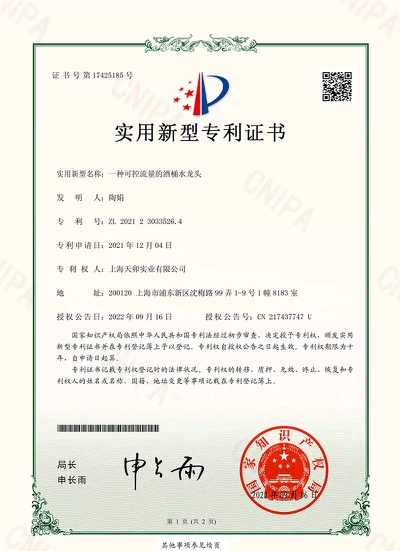
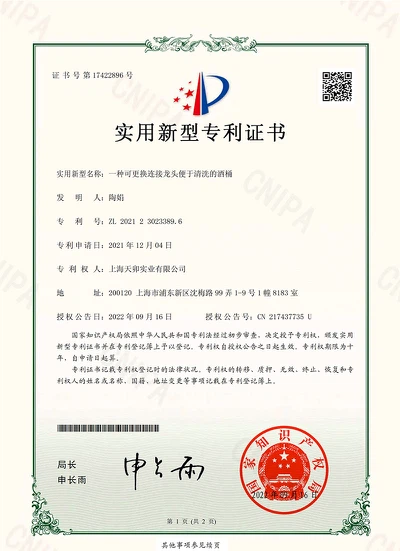
Pera Industry Co.,Ltd has been certified by ISO 9001 International Quality Management System and CCC(China Quality Certification Center). The whole process of production, management, and after-sales service is organized by the company. The quality of our products is in leading leval both at home and abroad, which is stable and reliable.





FAQ
Q: What is a Draft Beer Tower?
Q: What materials are Draft Beer Towers typically made from?
Q: How does a Draft Beer Tower work?
Q: Can a Draft Beer Tower be used with different types of beer?
Q: How do I maintain a Draft Beer Tower?
Q: How do I keep beer cold in a Draft Beer Tower?
Q: What is the typical height of a Draft Beer Tower?
Q: Can I use a Draft Beer Tower outdoors?
Q: How many taps can a Draft Beer Tower have?
Q: Can I install a Draft Beer Tower myself?
Q: What is the difference between a Draft Beer Tower and a Beer Dispenser?
Q: Do I need a special gas for a Draft Beer Tower?
Q: Can a Draft Beer Tower be used with a Cornelius Keg?
Q: How do I troubleshoot foaming issues in a Draft Beer Tower?
Q: How do I choose the right Draft Beer Tower for my establishment?
Q: What are the common problems with Draft Beer Towers, and how can I address them?
Q: What is the ideal temperature for draft beer in a tower?
Q: How do I prevent cross-contamination in a shared Draft Beer Tower?
Q: Can a Draft Beer Tower be integrated with point-of-sale systems?
Q: What are the energy requirements for a Draft Beer Tower with a cooling system?
Hot Tags: draft beer tower, China draft beer tower manufacturers, suppliers, factory, lighted beer tower, beer tower bar, beer tower with tap, beer tower drip tray, 3l beer tower, beer and beverage tower


